
Being creative is beneficial for our emotional well-being & mental health across the life-span! Traditionally creativity was thought to be for exceptional people, but we can all be creative, given the chance! Creativity is not just about the arts- painting, acting, dancing… it can also be scientific too! This can involve problem-solving and testing an idea to see if it works. The process of investigating, exploring and inventing is also creativity! Babies are natural explorers, who begin to discover their world from the moment they are born building connections to make sense of this world. Creativity can be defined as a journey in which we challenge our originality, problem-solving abilities and our imagination.
What is creativity and how can we nurture and encourage our children to be creative?
Many people view creativity in terms of its outcome. A gorgeous painting or sculpture, a beautiful acting scene, these are all end-products of the creative activity. Being creative is more than just the end product, it is about the process.
Every child is capable of being creative when there is the right encouragement and support… Loris Malaguzzi, founder of the Reggio Emilia approach to pre-schooling, mentioned that creativity is more obvious when adults pay attention to the child’s cognitive processes versus the end product.
Creative expression can be established through play. This celebrates the child’s uniqueness which is vital to establishing a child’s sense of self. Creative play encourages problem solving and children can experiment with thought processes and actions using appropriate materials.
So… what exactly is creative play and how does it help child development?
There is an overwhelming amount of evidence that suggests that play is crucial to learning. Through play, young children can develop their curiosity and be natural explorers of the world around them. This, in turn, builds their confidence, communication, and intrinsic motivation to learn. It also builds their natural dispositions to learning and encourages behaviours such as resilience, persistence, risk taking and cooperation. Through exploring endless possibilities through play, children nurture their creativity. Possibilities can be generated through all aspects of play such as cooking, outdoor play, water play, physical play, writing & drawing etc. Children can ask questions and explore their thoughts and feelings freely through creative play. They can come up with their own original ideas. Through this process, famous psychologist Vygotsky believed that creativity occurs when any discovery occurs- be it scientific, artistic or technical.

The stages in creative play
Graham Wallas, a social psychologist created a model where creative development follows stages. These include:
Preparation:
This involves gathering information and coming up with your own ideas. This is also known as the “planning” stage.
Incubation:
This stage allows you to free your mind and think about your creative goals. You nurture your creative ideas by taking a step back and encouraging “unconscious thinking”.
Illumination:
This is the ‘aha’ moment in the creative process, where everything falls into place for the thinker.
Verification:
This is the last step of the creative process where everything falls into place. The thinker finalises their ideas by evaluating, analysing and building on their idea.
These stages are described as flexible and promote resilience in children. Children are able to come up with their own thoughts, overcome challenges, and are free to move forward and backwards in their thinking.
How can I encourage my child to be creative? Some ideas for creative play
A fine balance between engaging the child as well as allowing the child to freely explore and take the lead during play is important when nurturing creativity. Instead of imposing ideas, you can observe your child play and allow them to make their own decisions and choices to develop creativity. What is important is the process or the journey, rather than the end product. Celebrate your child’s ideas and engage them through open-ended questions as they play e.g. “How do you think we could play with this?” “What can we do?” This can help them notice the thinking process.

Some ideas for creative play that you might want to try at home, include:
• Outdoor play : Going on an Adventure:
Go out into nature with your children and bring a basket. They can fill up the basket with anything they like! Let your child lead! From leaves, flowers, sticks to pebbles and pine cones, let your child collect what he/she desires! This open-ended play allows your child to make his/her own decisions and explore endless possibilities independently.
• Messy Play: Playdough making:
The simplest recipe involves flour, salt and water. Playdough is super malleable and your child can shape the dough themselves working on their fine motor skills. Pulling, stretching, squeezing, rolling, pinching are just a few ways they can shape the dough! You could even leave some items such as a rolling pin, spoons, containers, a garlic press or even little stones, twigs or cotton buds for them to use their imagination and design their own theme!
• Art and craft: Old materials:
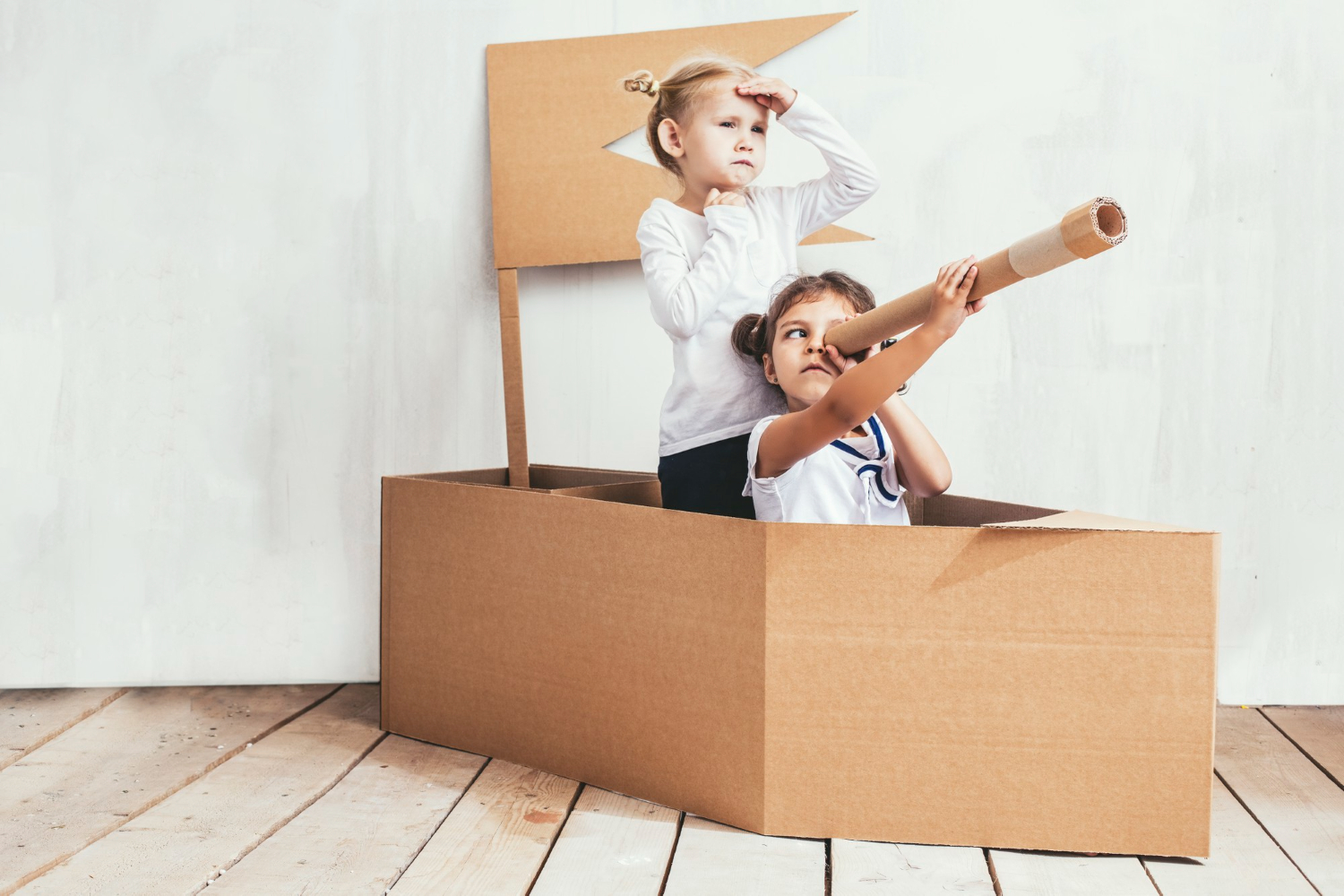
You could let your child explore some old recyclable materials such as empty boxes, cartons and containers. Leave some markers and colouring pencils out and watch them use their imagination to make something on their own! A spaceship? A pretend pizza delivery box? You could even take this activity outside and watch them draw in the sand /soil using sticks and stones!
Drawing allows children to express their thoughts and ideas in an open-ended way- especially for the older ones!
• Imaginative play: Pretend Play:
Children often engage in imaginative play based on their interests and experiences. Parents can help support this play by leaving out items or props that support their interests e.g. for a food lover, you could leave out some paper and tape as well as markers for them to create their very own chef hat! For animal lovers, you may consider leaving out some old fabric for them to create a tail! Some old chairs work well for transport lovers- they could build their own aeroplane, train or bus and perhaps design their own tickets for you to ride with them. Allow your child to lead the play no matter how tempting it is for you to jump in and take over.
Creativity is the child’s unique response to how they experience the world around them. Children have an innate curiosity to explore. As parents and professionals our job is to support our children as bystanders and observe this delightful process as they playfully explore the world.
To meet with a professional psychologist or counsellor, call The Other Clinic at 8809 0659 or email us hello@theotherclinic.sg.
References