
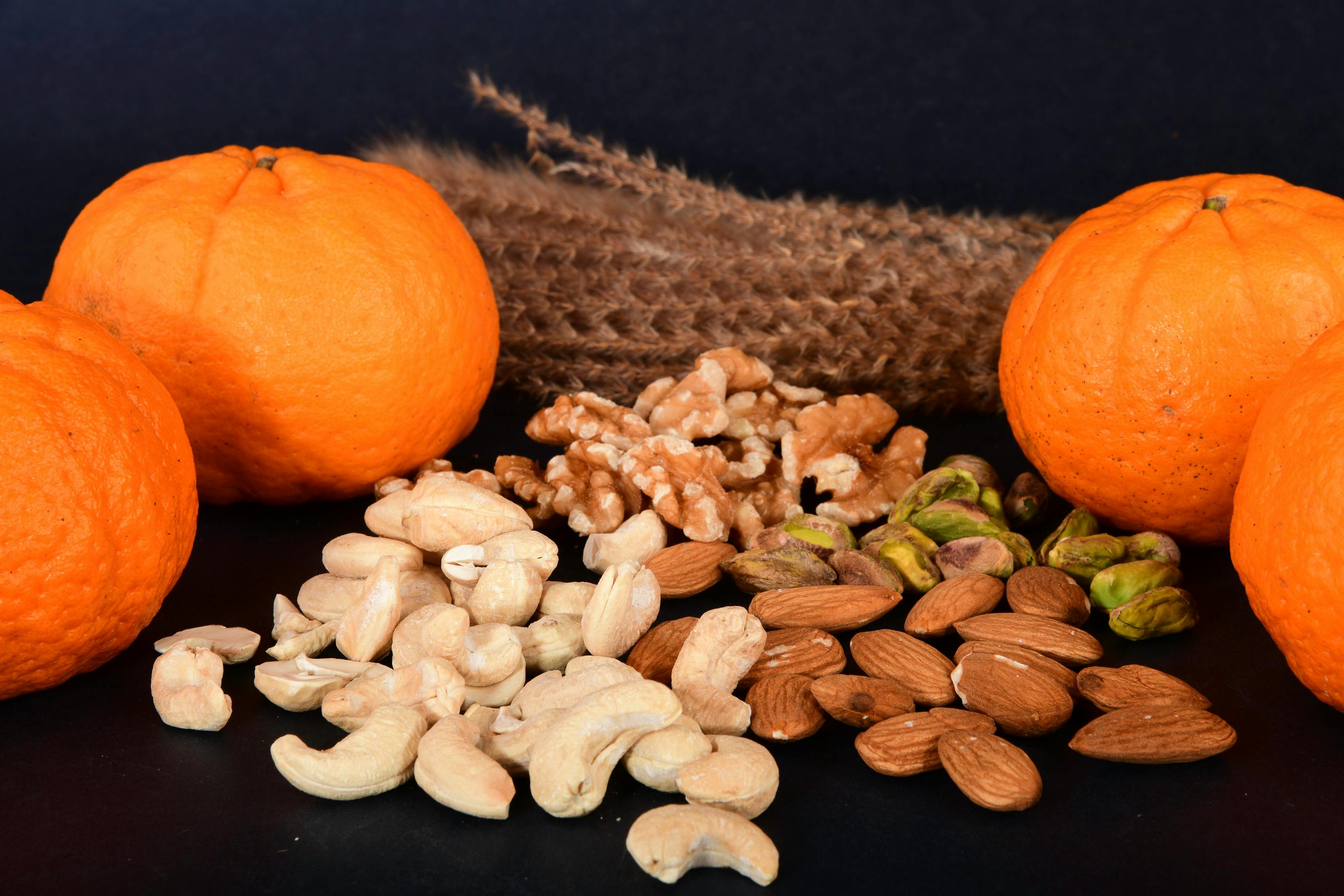
Coping with the Lunar Reds and Oranges
With that, here are some ways to help you handle, even embrace the Lunar reds and oranges, like a Chinese dragon in calm control over turbulent waters:
1. Make room for all colours of emotions (even the greys, blacks and whites)
Conventional wisdom, especially in Chinese culture, is that expressing unpleasant emotions or discussing less auspicious topics such as illness, death, loss etc. are huge taboos that bring “bad luck” as they are believed to plague you for the rest of your year, even life.
But it is NOT the expression or discussion of unpleasant emotions or topics that drives the plague of series of misfortunes for people, rather it is avoidance and/or repression that would maintain these unpleasantries especially if they remain unprocessed.
For a start, it is important to acknowledge that stresses and anxieties surrounding the festivities are part and parcel of the experience for many of us, and that it is completely okay to feel a mixed bag of emotions about CNY, even if they are opposing ones. You can feel joy and sadness, excited and nervous, grateful and angry, love and grief, the list goes on…
Whatever the contents in your mixed bag of emotions, allow them to just be present and show gentle curiosity towards them. They are making themselves known to you because they are trying to communicate something about your boundaries and values. The question then is, what are your boundaries and values?

2. Pick battles that are worth fighting for
For every major war, comes many smaller battles – the non-negotiables, the negotiables, and the ones that are best to let go.
Knowing which situations are considered your non-negotiables, negotiables or the can-let-go’s is a matter of knowing what your boundaries and values are. Generally, boundaries and values can span across physical, time, emotional, social/relationships, intellectual, material, sexual, work/professional and digital/online areas.
As an example:
• Non-negotiable: “I highly value having my alone me-time (time boundary). This is important to me because it helps me recuperate from social interactions which can be draining for me, and ensures that I also look after my own needs and wants.”
• Negotiable: “I highly value connection, but also people’s freedom to express their thoughts, feelings and opinions (social/relationships and intellectual boundary). This is important to me because I believe relationships thrive when everyone, including myself, is respected and heard.”
• Can-let-go: “I highly value health, but also connection especially through food (health boundary). This is important to me because for me food is both a source of nutrition and enjoyment.”
Notice that your non-negotiables will likely be more concrete and definitive, while your negotiables and can-let-go’s allow room for flexibility.
Thus when advocating for yourself, it is most worthwhile to invest your time and energy into defending your non-negotiables.
Not being able to fight all battles does NOT mean you are weak or a failure. Veteran military strategists, chess players etc. would argue (from a place of experience and wisdom) that letting go of battles that cannot be won and making compromises are all part of the process to fight for your causes and even achieve a win-win situation all at the same time.

3. Set boundaries P1: Assertive communication
When you are clear about your boundaries and values, it becomes easier to know when they have been trespassed in social settings, and for you to set boundaries with people. Assertive communication is a useful technique to relay your needs and wants without hurting the other party and the relationship. This comprises a few steps, and can look something like this:
Say your curious aunt broaches the topic of weight and body shape, and is asking about what you did that led to your current state.
1. Validate the other party’s needs/feelings, e.g., “I understand you are concerned about me…”
2. Be honest, brief and direct about your needs, e.g., “… but/however, I don’t feel comfortable talking about my weight and body.”
If your aunt gets your memo and moves on with the conversation, that is ideal. However, sometimes, it may require you to go beyond the above two steps to ensure that your boundary gets across:
3. Repeat yourself again and if needed, rephrase/add emphasis (by addressing the person specifically, being more explicit etc.), e.g., “Auntie, I appreciate your concern, but I really don’t want to talk about my weight and body right now.”
4. Deploy peace-keeping tactics to send more signals that the current topic of discussion is not appropriate:
• Deflecting and redirecting the spotlight to the other party, e.g., “But what about you auntie, it’s been long since we met. How have you been?”
• Finding a common topic of interest that you feel more comfortable talking about, e.g., “Auntie, I can tell you really enjoy CNY that you decorated your house so nicely! I love coming over to your house, so pretty and charming just like you!”
• Leveraging the power of humour (but only if you are comfortable), e.g., “Oh auntie, thanks for checking in. Wanton mee may be my favourite dish that I eat most often, but don’t worry I don’t weigh one tonne!” (get it? wanton, pronounced as one tonne? …nevermind) or “Auntie, I really look pregnant? Thanks for noticing, usually it’s like that during CNY because my body is making more space in my tummy to enjoy all the good food you’ve prepared for dinner later!”
• Diverting yourself or the other party to another area/activity, e.g., “Oh auntie, I see that grandmother and mother are busy preparing a steamboat in the kitchen – let me go over and help!”
If your repeated assertions still whizz past your aunt’s ears like the wind, then it would be ideal to communicate your boundaries by following through with an actionable consequence. For example, you can choose to stop engaging and instead remove yourself physically from the situation firmly but politely. Having a wingman (or wingwoman) who feels comfortable enough to back you up can also be helpful.

4. Set boundaries P2: Follow up with action
To successfully set boundaries, communicating them would often require some form of follow-up action. Some practical examples could be:
• Prioritising, delegating, planning or eliminating tasks according to urgency and importance (the Eisenhower matrix can be a helpful tool)
• Setting limits on the amount of resources (time, energy, money etc.) you are able/willing to invest for priority and planned tasks like spring cleaning, house decorations, reunion dinners, gatherings etc.
• Finding alternatives that serve similar functions, e.g., using poker chips instead of actual money during social gambling, playing board/card games instead of gambling, drinking non/low alcohol drinks during social drinking
• Engaging in solitary activities that are rejuvenating for you, e.g., watching your favourite Netflix series, reading, playing music
Consistency, in all its forms, is key – it is important that you maintain your boundaries firmly (even if it means having to repeat yourself over and over again), but additionally, that what you intend to do about your boundaries matches with what is being verbally communicated to others when they are being crossed.
5. Maintain realistic expectations
It would also be majorly beneficial to manage your expectations for how CNY celebrations will play out. There is often an unspoken pressure to ensure that the festivities turn out grandly and smoothly, especially since CNY is when Chinese families, immediate and extended, gather together to commemorate the new year. One question to ask yourself is: what do I hope to get or gain during CNY?
If you hope for CNY to be mainly a festival of connection and bonding (which is likely the case for many people), what would be the most important to facilitate this?
Sure, big and spacious space, beautiful decorations, huge spread of food and snacks, leisure and entertainment options (best case) may all be helpful, but are all these so necessary that without them CNY will be completely ruined (worst case)?
Sometimes, keeping things simpler will not only free you from additional/unnecessary worries, it will also allow you to be more present in the moment and connect better with your loved ones. The “best case-worst case-most realistic scenario” technique can be helpful to ground yourself to reality and what matters most.

6. Find common ground
Another part of maintaining realistic expectations is also in relation to relatives whose behaviours, beliefs and communication styles do not agree with yours. The harsh reality is that the annual CNY festivity is unlikely to be the magic wand that will transform your relatives into the most agreeable and easy-going individuals.
Admittedly, it can be difficult for the younger ones to communicate smoothly with the older generation who are raised with different cultural sensitivities, priorities etc. However, the elders are likely to find it just as hard, if not even harder to connect with us especially as they try to adapt to the rapidly ever-changing world today, which can oftentimes feel rather isolating and alienating for them.
Because of our open-mindedness, better understanding of mental health, and ability to adapt, we can be quick to sniff and snuff out behaviours or beliefs that are considered offensive or harmful. But it is also precisely with these strengths that we can cultivate more empathy and compassion for our elders. We may differ vastly in our attitudes and belief systems, but fundamentally, we are all human and social beings who value identity and sense of autonomy, and also connection and a sense of belonging all the same.
Just like how our trays of togetherness may be filled with different sweets/snacks yet can still coexist in harmony and be enjoyed in their own ways, the same can be applied when managing the dynamics between the young and old. Every interaction where some comparison is involved need not always turn into a competition over which generation is more or less of something, or which generation is right or wrong; instead, such interactions can serve as opportunities for all of us young and old to learn more about our experiences, strengths and tribulations that contribute to the people that we are today.
Here is an entertaining but light-hearted sketch on managing interactions with relatives that you can watch:
P.A.Q.A (Passive-Aggressive Question Avengers) | The Ann & Ben Show Ep 6
Caveat: Of course, this should not be applied indiscriminately to all cases – there are exceptions when empathy and patience towards the other party are much harder to exercise. In such instances, setting boundaries would be more ideal, for it is exactly during these times when the person who needs that empathy and patience the most is yourself.
—————————
So here comes the question: is Chinese New Year a festival for reunion or disunion?
If it isn’t obvious enough, most would say that CNY is a festival for “reunion”, “with loved ones”.
But I’d like to offer a tangerine curveball. Or two, since good things come in pairs:
As much as CNY is indeed the festival of reunion with your loved ones, it is also the festival of reunion with yourself, when you get to attune to what really matters for you. Because you and your needs are just as important as everybody else’s in the family.
Yet, true reunion and harmony requires some form of ‘disunion’, or more specifically, ‘differentiation’, where we are able to accept, respect, and show compassion and kindness to both others and ourselves, and the full range of experiences that accompany all of us.
Traditionally, Chinese families would exclaim wishes of good fortune and abundance as we ‘prosperity toss’ our platters of yusheng.
As we do so, let us remember that good fortune and abundance extends beyond our careers/studies and material wealth, while keeping in mind our healths in body, spirit, and mind.
Thus, starting this CNY, as we “lohei” (Cantonese for tossing up) our way for the year ahead, aside from the usual auspicious phrases we can expect such as 恭喜发财 gōng xǐ fā cái, 万事如意 wàn shì rú yì, 年年有余 nián nián yǒu yú, and many more…
… May we also toss and toast to a rich fulfilling life filled with meaningful connections, healthy boundaries, a stable secure sense of self and a peace of mind, and above all, commit to keeping to these well-meaning wishes for all of us.
To a roaring dragon year ahead!
– Written by Esis Quek, Assistant Psychologist by day and jaded Chinese Singaporean female by blood
To meet with a professional psychologist or counsellor, call The Other Clinic at 8809 0659 or email us hello@theotherclinic.sg.
References
Al, The Psychology Practice. (2023, December 25). A guide to navigating conversation. The Psychology Practice | The Practice Log. https://thepsychpractice.com/plog/aguidetonavigatingconversation
Chew, J. (2023, January 17). Connection at reunion. The Other Clinic. https://theotherclinic.sg/2023/01/17/connection-at-reunion/
Dass, C. (2021, December 18). Chinese New Year 2022: Tips on dealing with family, loneliness and setting boundaries during the season. Tatler Asia. https://www.tatlerasia.com/lifestyle/wellbeing/how-to-cope-family-loneliness-seasonal-depression-holiday-season-therapists-advice
Eng, D. (2023, January 16). The CNY Battle Guide to Countering Invasive Questions from relatives. Native. https://www.wegonative.com/article/the-cny-battle-guide-to-countering-invasive-questions-from-relatives
Gan, E. (2020, January 11). Expert tips to minimise tension and stress at Chinese New Year family gatherings. TODAY. https://www.todayonline.com/singapore/expert-tips-minimise-tension-and-stress-chinese-new-year-family-gatherings
Nash, J. (2023, April 19). How to set healthy boundaries & build positive relationships. PositivePsychology.com. https://positivepsychology.com/great-self-care-setting-healthy-boundaries/
Rajendrakumar, J. (2022, March 1). Are you losing you in the relationship? Enmeshment, Detachment, and differentiation. The Gottman Institute. https://www.gottman.com/blog/are-you-losing-you-in-the-relationship-enmeshment-detachment-and-differentiation/
Singapore Psychological Society. (2022, January 31). Managing Challenging Conversations during Chinese New Year. Facebook. https://www.facebook.com/singaporepsychologicalsociety/posts/pfbid02RydEaNfZHtuAMvGTr2XxWtAw1E2VhstfbhBpfWwcVHv6xJM1myu6dWe3wpmN9pwul
Tristram, T. (2023, January 20). Beginners’ guide to Chinese New Year in Singapore: All you need to know about CNY greetings, traditions and food! HoneyKids Asia. https://honeykidsasia.com/chinese-new-year-in-singapore/